
Opaque Greys · Full session
When I learned to use greys as values,
not as shadows, everything changed.
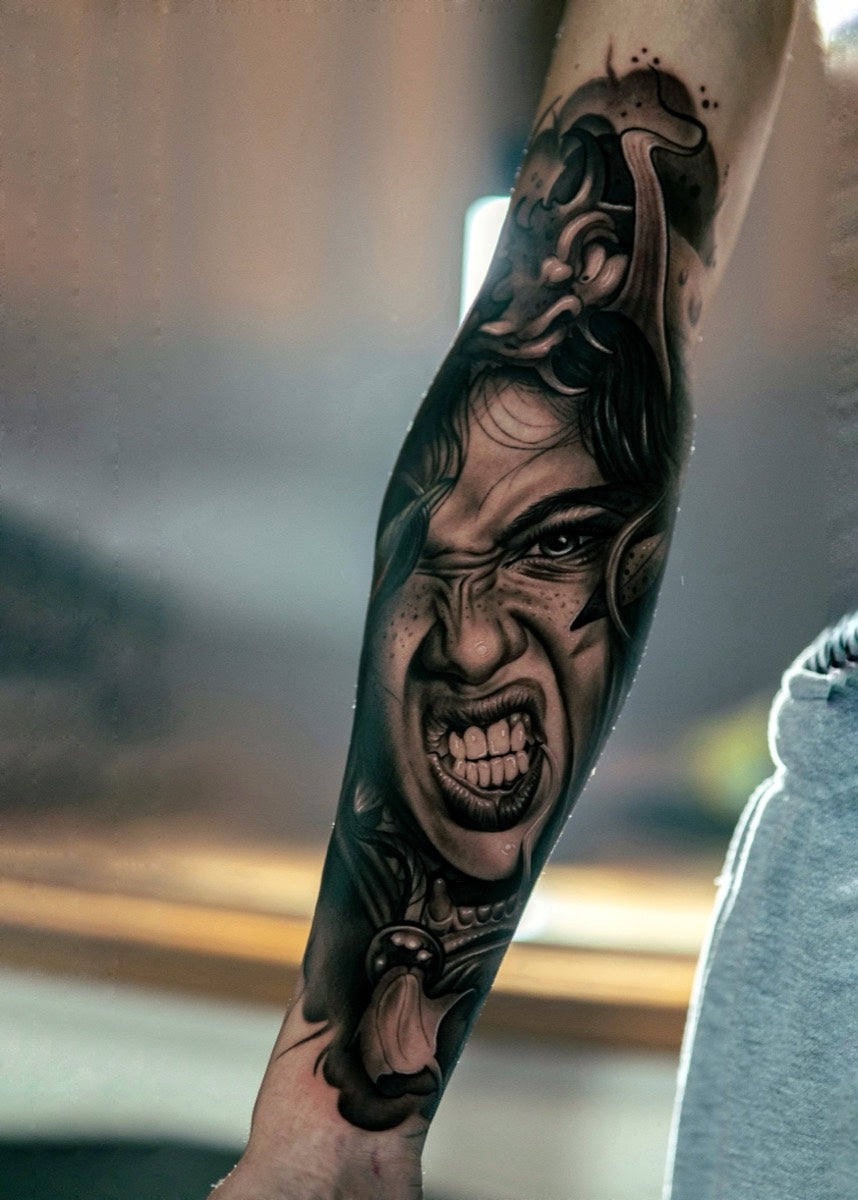
If your Opaque Grey portraits come out flat or heal dull, it's not your hand or your machine. It's that the grey is being treated as a shadow, black diluted by eye, instead of as a value with its own scale. Charly Ávila recorded a full session building a sculpture-style portrait, explaining every decision as he makes it. This is what used to happen to him too, and what he does differently now.

Five walls, five ways out
I've been there too
Five situations any tattooer who works in greys will recognize. In each one, what Charly used to do, and the exact decision that fixed it. All five show up on real skin inside the session.
- 01
"No matter how much I shaded, the portrait stayed flat"
Volume doesn't show up by adding detail: it shows up by building the exoskeleton first. Before touching any detail, Charly squints to blur the reference and see only the masses of light and shadow, then lays down that structure in pure black. With the exoskeleton on the skin you already have half the portrait, without having drawn a single pore.
«I squint to blur what I'm seeing, and that way I can see the exoskeleton of the image to build the volume.»
Charly Ávila Structure first. Detail last.
- 02
"My greys healed light and weak"
Black diluted by eye changes from one session to the next, and comes up short when it heals. Charly lays out a set of opaque greys, from pure black to off-white, and covers all the skin with real value. Every tone is set before starting, so the grey that goes in today is the same one going in tomorrow.
«Grey isn't shadows. Grey is a value that has different degrees of tone.»
Charly Ávila Grey is a value, not a shadow.
- 03
"Between one tone and the next I'd get a hard cut"
Transitions don't happen on their own: they're built. In the session you see how to shift from one tone into the next with the shadows diluted at 10% and 50%, invading the neighboring tone just barely to connect them without muddying them. And one rule that saves you from surprises: the tone with more pigment always wins over the diluted one.
«When we invade the black, we invade very lightly, so it doesn't shift too much. Just so a connection forms.»
Charly Ávila Transitions are built drop by drop.
- 04
"Halfway through the session the skin wouldn't take any more"
If you saturate all at once, you run out of skin before you run out of portrait. Charly always works with margin: he leaves room to go back in without breaking the skin, starts with the biggest round magnum, which makes less of an incision and allows more layers, and goes in with a pendulum motion instead of digging the stroke in.
«Margin means working the skin leaving a percentage of room, so you can go in again without breaking it.»
Charly Ávila Margin is what saves the piece.
- 05
"I put detail into everything and nothing stood out"
If everything competes, nothing matters. The impact of the piece lives in the hierarchy of planes: maximum contrast and detail in the eye-nose-mouth triangle, and deliberate blur on the hair, neck and background. That hierarchy isn't done by hand: it's executed by the needle scale, from the magnum to the shader to the liner depending on the plane.
«If everything competes, nothing matters. And if nothing matters, the tattoo doesn't work.»
Charly Ávila Impact lives in the hierarchy.
All of this, on real skin
Watch how every decision gets applied in the full session
The recorded session
Over ten hours, no cuts, explained as it happens
It's not a highlight reel with music. It's the entire session of the sculpture-style portrait, from reading the anatomy of the forearm to the healed result, with Charly explaining every decision at the exact moment he makes it: which needle goes in, at what voltage, how much dilution each tone carries and why.
- Over 10 hours of session
- From anatomy reading to healed result
- Every decision, explained
Real clips from the session


What you'll see, phase by phase


Who's teaching
Charly Ávila
Pro tattoo artist. Realism specialist.
- +30Awards & conventions
- RealismSpecialty

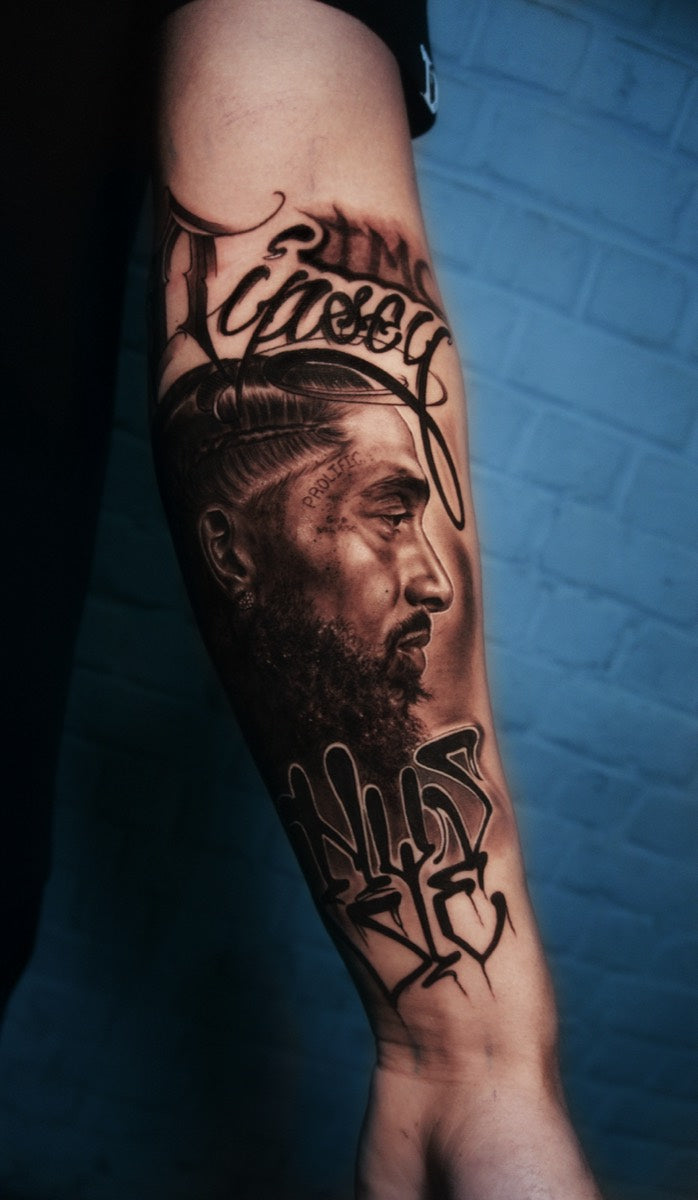
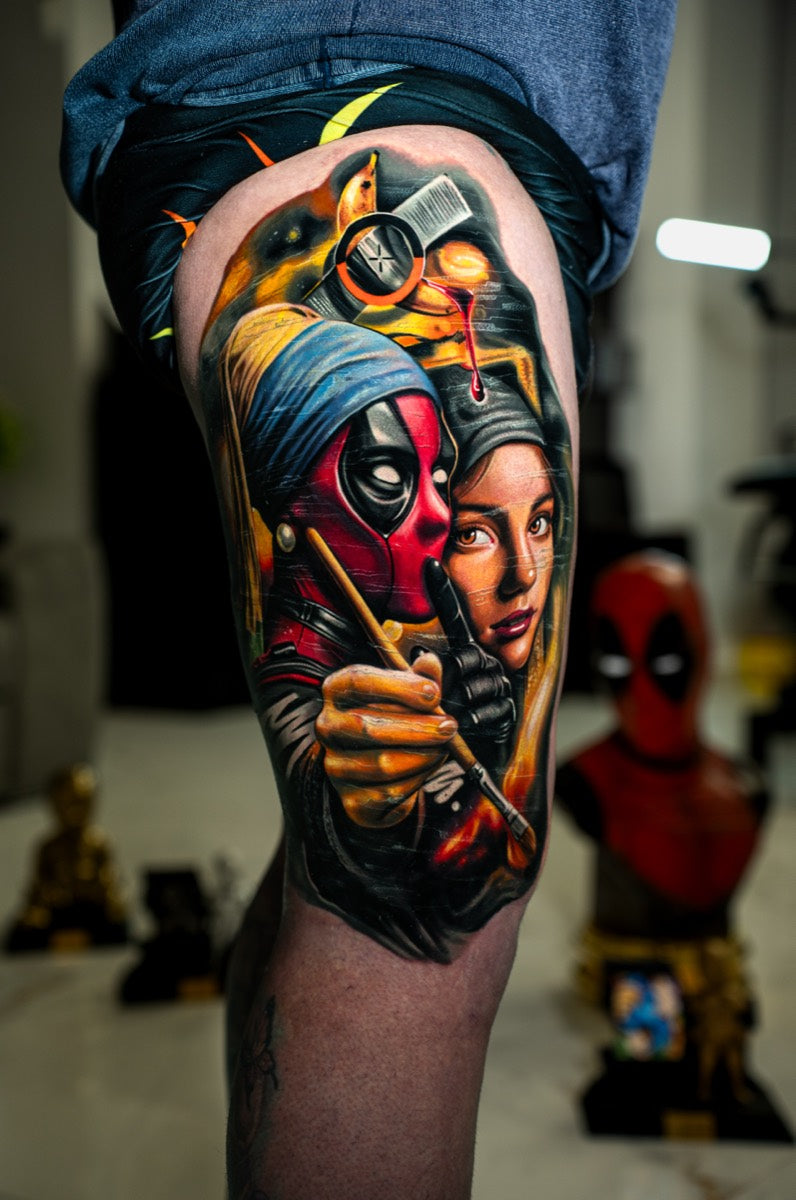
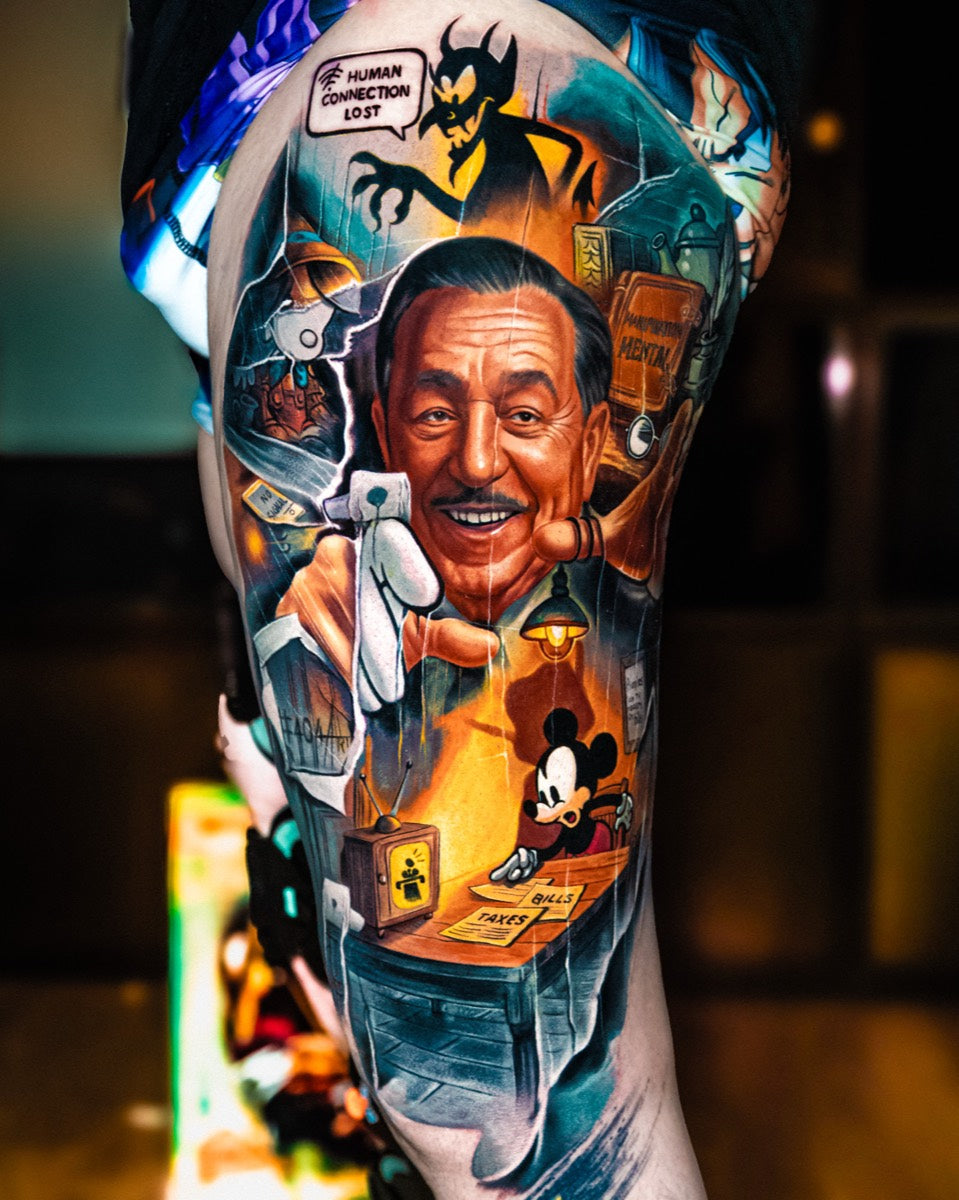
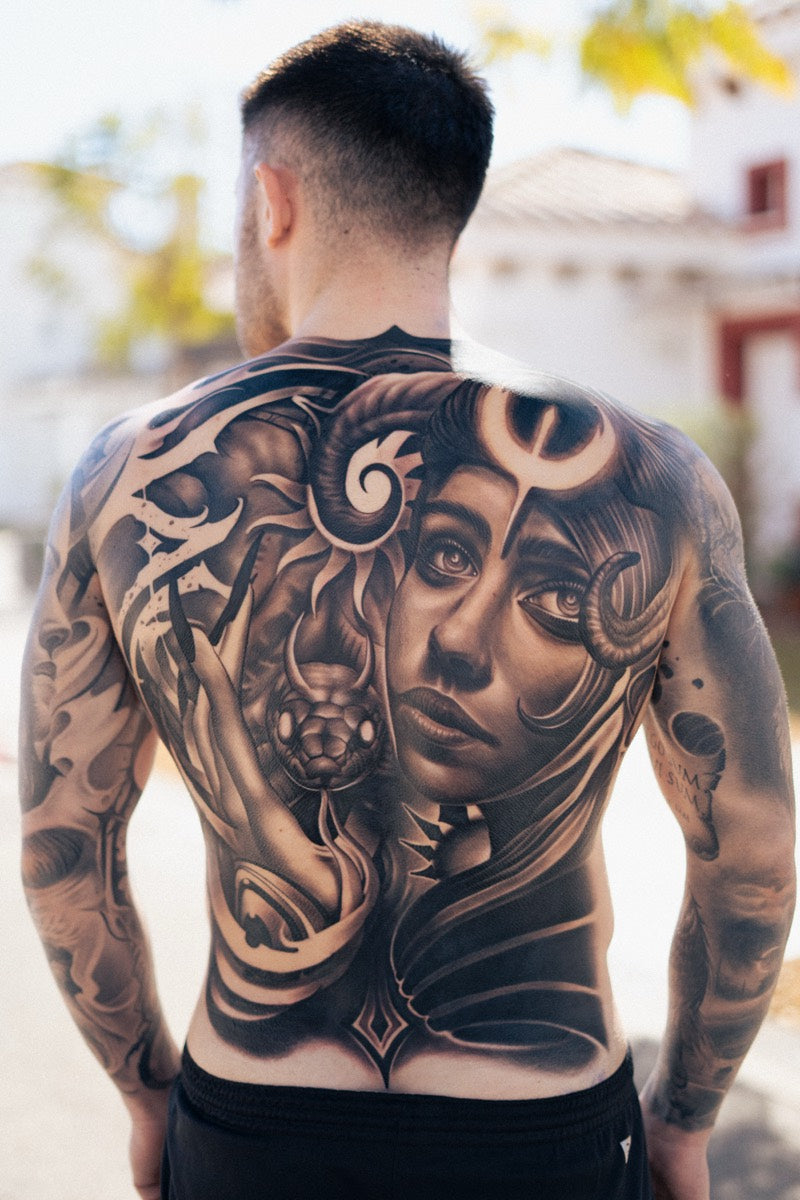
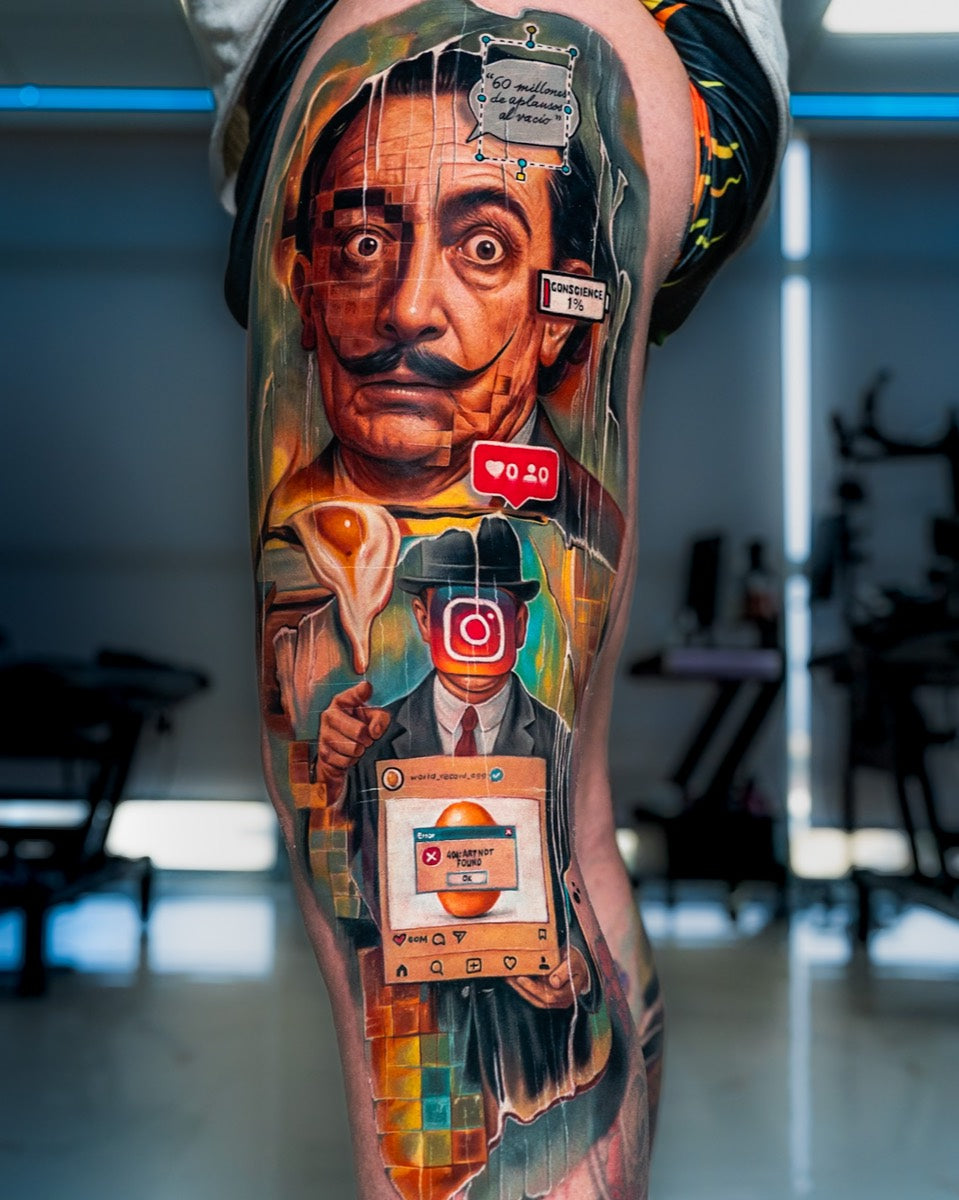
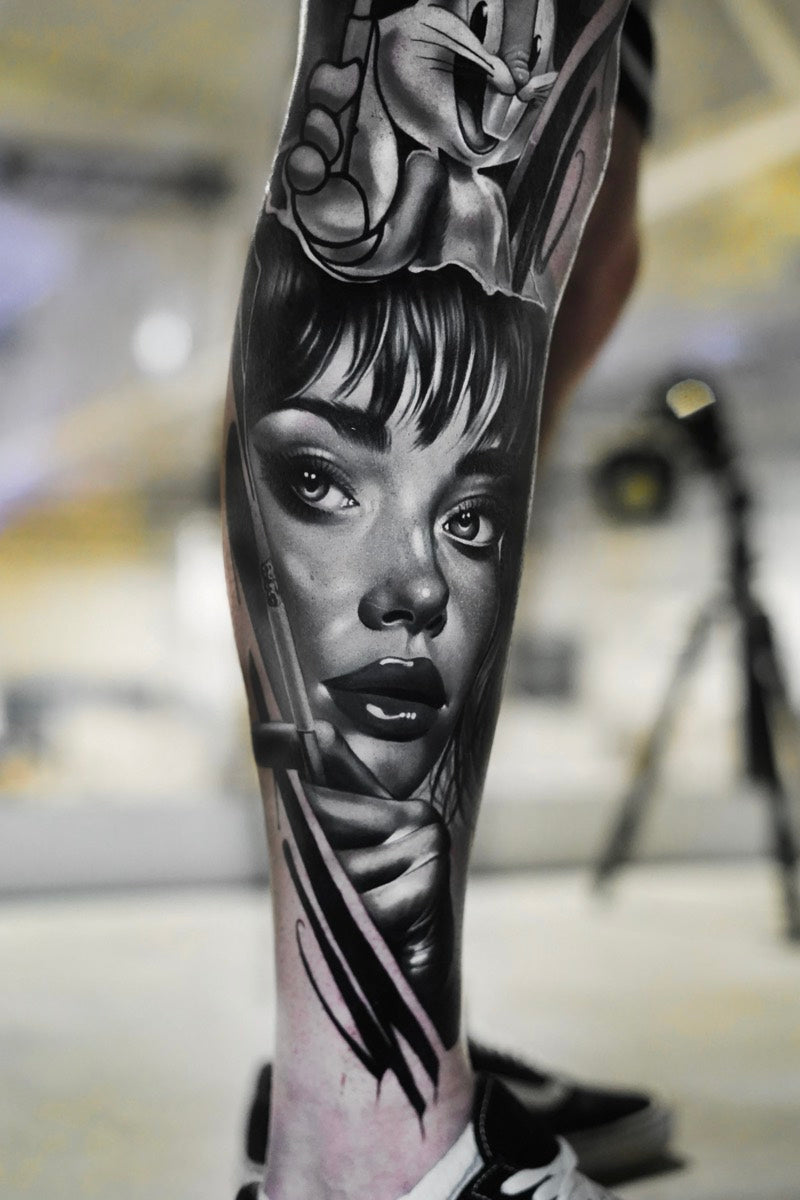
Who's teaching
Charly Ávila
Pro tattoo artist. Realism specialist.
- +30Awards & conventions
- RealismSpecialty
In realism, it doesn't matter what style you're doing: you need patience and you need to make every decision with awareness.
The next step
Stop guessing your greys

Inside the masterclass you have the full session: the anatomy reading, building the opaque grey set, the exoskeleton, the layers with margin and the final highlights. With lifetime access, so you can watch it again every time you've got a reference in front of you, and comments under every lesson that Charly and the team answer personally.
Lifetime access. Diploma included. 30-day guarantee.